
Subscribe to continue reading
Subscribe to get access to the rest of this post and other subscriber-only content.
Dream ✨Imagine ✨ Believe
Subscribe to get access to the rest of this post and other subscriber-only content.
If you don’t follow me on social media, you might not have seen me plastering the cover all over the internet. So here it is: the official cover for the Sound of Nothing! It took far too many months to become a reality, but it was so worth it.

Blurb:
Without a keeper, no soul is safe.
In the peaceful and secluded Konota Valley, every 16-year-old must embark on a sacred journey to find their animal soul keeper. The life-long bond protects their soul from malicious demons that would devour it, leaving behind an empty husk.
As the mostly ignored misfit, Shaya has always felt isolated within her own tribe, but she hopes finding her keeper will also help her find a purpose. Instead, her return with a bizarre and frightening beast only leaves her more confused. She soon learns her keeper is a drakon, a legendary creature from the northern mountains, but that knowledge does nothing to win her the acceptance she longs for.
When drakon riders invade the valley, Shaya’s people begin to question her loyalty. The invaders might offer what she’s always wanted, but she must decide whether finally belonging is worth betraying the few people who still believe in her.
I see people compare Simba’s Pride and Romeo & Juliet all the time, often with a negative connotation like “Lion King is just Hamlet and Simba’s Pride is just Romeo & Juliet” like that’s a bad thing. First of all, there are endless books and movies based on Shakespeare plays that are excellent. Not to mention the plethora of fairytale retellings that are so popular right now. So even if that movie was the exact same plot as Romeo & Juliet, that wouldn’t be anything to snub at.
… except it’s not.
Yes, Simba’s Pride is about two characters from warring families and tragedy ensues because they fall in love. That’s about where the similarities end.
So let’s talk about the differences between these two stories and why labeling anything with starcrossed lovers is kind of short-sighted and makes me feel like you haven’t actually read Romeo & Juliet.
Obviously there will be tons of spoilers for both stories below, so if for some reason you aren’t familiar and don’t want the whole plot spoiled… stop reading.
So… yeah. If feuding families + romance = Romeo & Juliet, then the Lion King 2 is just that. It’s a pretty shallow assessment if you ask me.
Top 10 songs for Chasing Nightmares
For those who don’t already know, Chasing Nightmares has a character with aphantasia, a phenomenon where people are unable to visualize images voluntarily. I share this “condition,” something I discovered only within the last year. I wanted to put something up on here for people who are curious about what that is and how it affects people who have it.
I didn’t even realize this was a thing until I saw a post on social media about it. I went through college with a psych minor and somehow never realized that when people talked about “visualizing” something they were actually able to see it in their head like it was real. Learning that people are capable of this… blew my mind.
I think a lot of people who have it doesn’t realize they do, because they’ve never even heard about it before. You don’t realize other people can do what you can’t. I’m hoping that this character will reach people who are unaware that they experience this phenomenon, perhaps resonate with them, and help them learn something about themselves. Because once you know, a lot of things start to make sense.
I don’t choose to see it that way, but it can affect my life in some detrimental ways. For one, I experience something called Severely Deficient Autobiographical Memory (SDAM), which is the inability to vividly recall personal events. I’ve talked to some people who describe “rewatching memories,” almost like a movie playing out in their head. This absolutely baffled me, since all I see when I close my eyes and try to think of a memory is darkness.
My inability to replay memories can make it difficult for me to recall any details at all. I’ve always had a hard time remembering events that happened to me, and I think many of my “memories” are secondhand products of people telling stories about events where I was present. I don’t personally remember it, but I can remember the story. I have very few memories from my childhood that I believe are actually my own recollection, not someone else’s description.
I also have a hard time recognizing and remembering faces, since I can’t visualize them, which partially explains why I struggle to recall names. If I don’t have a face to match it with, how am I supposed to remember one’s name? I’ve been approached by people who seem to know me, but I can’t for the life of me place who they are, which is an incredibly awkward experience.
After learning about this condition, I did a bit of a deep dive into the internet. A lot of people with aphantasia fall outside the creative spectrum… but not all. It makes sense that people who can’t visualize wouldn’t be interested in becoming artists or directors. Or writers. Despite this, there are actually a surprising number of artists, writers, and other creatives with aphantasia. People like me.
Some people with aphantasia have said they don’t understand the appeal of reading fiction because they can’t visualize what’s happening. Meanwhile, I was an avid reader as a kid and wrote my first novel in middle school. Apparently, the inability to literally play out the scenes in my head didn’t impact my desire to create stories. But I do think it impacts how I create stories.
I’ve always known have a tendency to under-describe things. A lot of times when I get to a part of a book where I need to describe a setting or something else in detail, I’ll mark it and come back to it later. I have to force myself to describe things like that, because if it’s not super important to the scene, I don’t care about it. I can’t see it in my head, so why do the details matter? I also give very minimal descriptions of my characters. Hair color, eye color, ethnicity, sometimes height if it seems relevant (if they’re very tall or very short). Finer details don’t matter to me. I’ve heard people talk about never being satisfied with adaptation casting because it never matches the image in their head, which until last year I couldn’t understand. I rarely took issue with casting as long as they matched the description given by the book. Sometimes even if they didn’t. Why do we care if someone’s eyes are blue instead of green? Now I’m realizing people have an actual image in their head for these characters, and it’s slightly different for everyone. So trying to fit a real person to that would be difficult.
People with aphantasia have to deal with facts and concepts in their heads instead of visuals. You might be able to visualize an apple in all its red, shiny glory, but I only have associations. I know an apple is red, or sometimes green. I know if the light hits it the right way, it has a sheen. It might have a stem, perhaps a leaf. I know all of these things. But I can’t see it. When I imagine scenes for my writing, I make a list of details in my head. I know my character is going to do or say this thing, but I can’t see it.
Let’s get back to Chasing Nightmares and the character who experiences aphantasia. If you haven’t read the book, there will be some minor spoilers ahead, so please consider reading it before you continue.
Cat Knight has aphantasia. She’s known something was different about her for a long time, though I don’t think she had a name for it until she was a teenager.
If you have read the book, here are some things you may or may not have picked up on:
Want to see more of Cat? Shattered Daydreams, Dreamscapers Book #2, will explore some of the other ways Cat’s aphantasia impacts her life, both good and bad.
A sneak peek at the opening paragraphs for the draft I’m currently working on! Want an expanded version/more excerpts in the future? Subscribe to my newsletter to get all the snippets and more!
Uneven black graffiti lines spelled out “enter if you dare” on the peeling WELCOME TO GIN CREEK sign.
I stared at the unwelcoming words as I passed, unease crawling up my spine. Considering my reasons for visiting, that message didn’t carry a lot of hope.
It had taken me about four hours to get to Gin Creek from the airport, traveling north, nearly to the border of the state. The drive had given me too much time to dwell on what had spurred the flight to Wisconsin. I still couldn’t believe I had bought a ticket and hopped on the plane the next day. No planning ahead. Unthinkable.
But Jasmine had stopped answering my texts and phone calls, which meant something had to be horribly wrong.
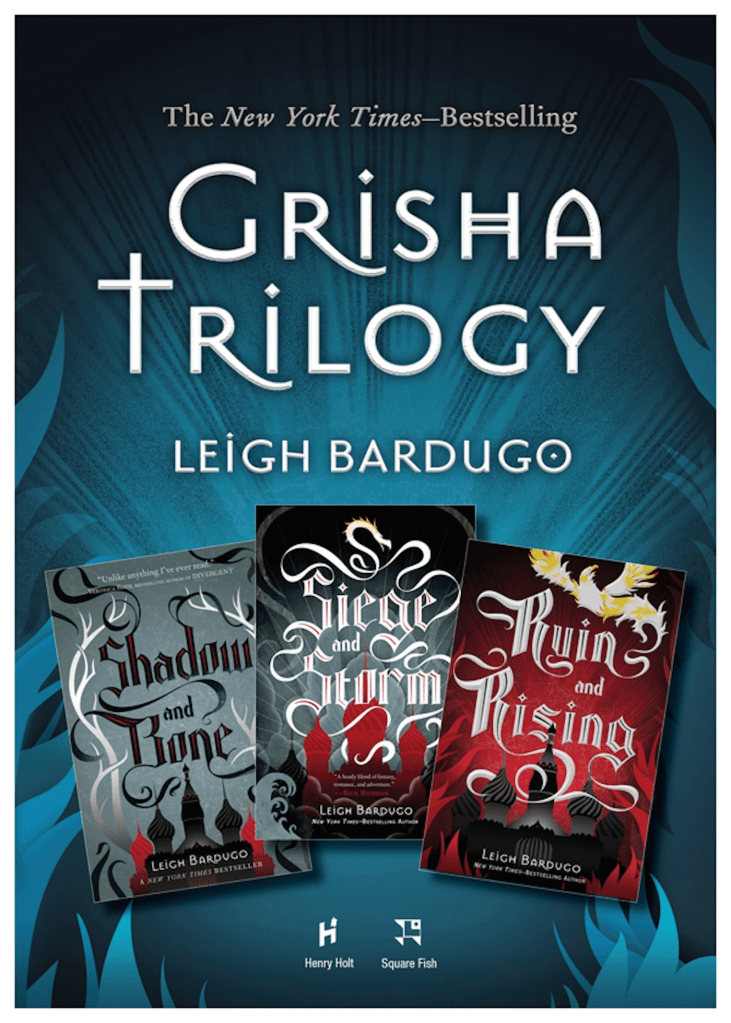
Shadow & Bone Trilogy by Leigh Bardugo (4/5)
I did a review for Shadow & Bone, but I wanted to do an overview for the entire series. I recommend this series for anyone who loves high fantasy with great world-building, fun twists, and questions of morality and fate. Also, anyone who has read Six of Crows first (like I did) and is underwhelmed by the first book, keep reading! I think it improves.
I actually enjoyed books 2 & 3 more than the first book. Part of this was the addition of Nikolai to the cast, but I think the characterization of all the characters improved, though I still prefer the characters in Six of Crows to anyone in Shadow & Bone. The message and writing grew stronger, as did the depth of emotion. The pacing for me improved as well.
The tropes above are things that can annoy me when done poorly, but I think this series handles them all very well. If you seriously hate these tropes in all forms, then be forewarned.
I’ve read series where the ending didn’t measure up or actually angered me, but I genuinely love the ending of Rise & Ruin. Without spoiling, it’s one of those bittersweet “it couldn’t have ended any other way” endings. This book also made me cry a little, something that hasn’t happened with the last several books I read (which is saying something, because if anything is at all emotional it will probably make me cry).
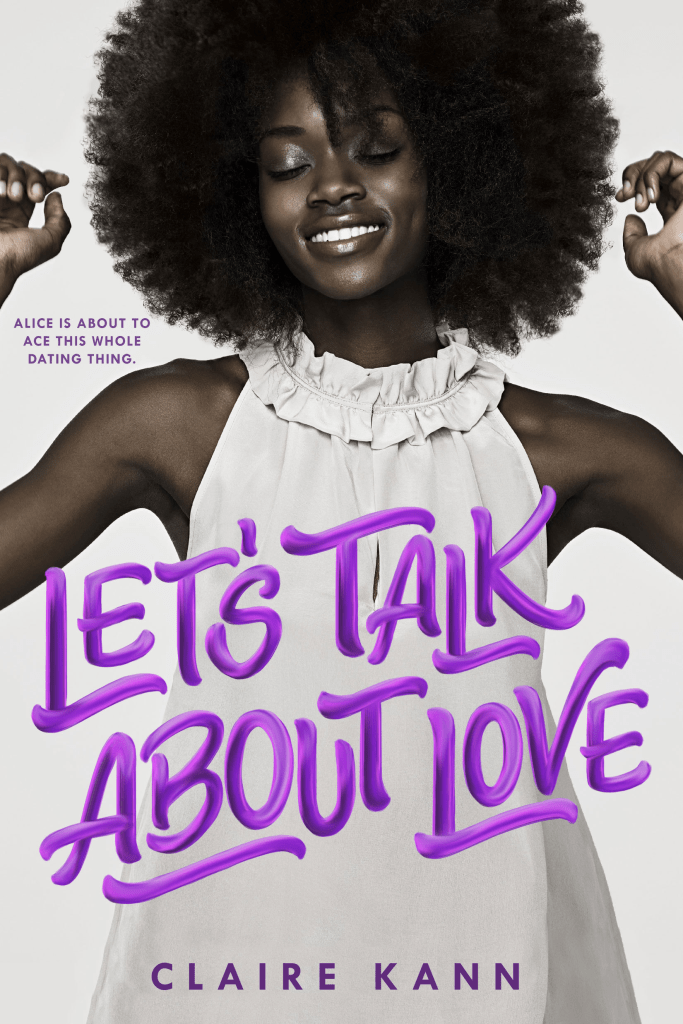
Let’s Talk About Love by Claire Kann (3/5)
This book is technically a two stars for me, but I added one because contemporary romance is usually not my genre. I read it because of the ace rep. There are a lot of angry reviews out there from other ace-spec people, and I’m relieved to say that I’m not one of them. There are some things I find concerning, but we’ll get there.
The plot of this book feels like your typical romance. Girl meets boy. Girl likes boy, and boy maybe likes girl too. But neither tells each other that because people don’t talk to each other. The thing that makes it less typical is the asexuality of the main character. They tell us right from the start that she’s asexual. Her girlfriend breaks up with her in the first chapter because she doesn’t want to have sex. Not because she won’t, but because she doesn’t actually want to. Most of the book is mundane bonding interactions between the leads, with some drama between Alice and her friends thrown in. There’s also a conflict with her family about her not wanting to go to law school. I find this type of plot boring, but it might interest someone who likes cute, low stakes contemporary romances.
Alice: Our protagonist is childish, awkward, and theoretically “cute,” although I’m not enamored with her. This might have something to do with the narration style more than Alice herself (more on that coming soon). Her personality is pretty much confined to pizza, TV shows, and… maybe books? She works in a library but I don’t remember her ever talking about liking to read books. She’s joined at the hip with her two best friends, who are dating each other. I feel like her being ace is brought up far too often, compared to her other identities as a biromantic black woman, but given the theme of this book I’ll let it slide. But for the record, I’m ace and I don’t spend nearly as much time thinking about being ace as she does.
Takumi: The love interest in this seems like a good person, but a somewhat boring one. Kind, thoughtful while expecting nothing in return, and apparently the prettiest person on the planet. I probably would like spending time around him in real life, but his character didn’t interest me.
Feenie: I strongly dislike Feenie, not because of her basic character traits necessarily, but the way she treats her best friend. I had a friend that was far too close to Feenie’s personality for comfort, and it went about the same way as this friendship, minus the make-up. Honestly, I wanted more from the “apology” between them. If you ask me, Feenie’s side of it was half-assed and too readily accepted. She basically said “I know I can be an asshole sometimes, oops.” But showed no intent to change the way she treats Alice, which was essentially ignoring her in favor of Ryan (Feenie’s boyfriend) and then getting pissed when Alice tries to form other friendships. As someone burned by a possessive friendship like this, it bothered me. There was a scene at a party–that Alice got talked into going to–where Feenie and Ryan go off to have sex and abandon Alice on her own, so she leaves with Takumi. Am I the only one who doesn’t see an issue with her choice to leave? I would have been livid if my friends abandoned me at a party I didn’t want to go to in the first place.
Ryan: Feenie’s boyfriend and Alice’s other best friend–in that order. He seems like a generally likeable person, but he has some of the same issues Feenie. He doesn’t hold a grudge quite as fiercely as his girlfriend, but he still acts like Alice paying attention to anyone but the two of them is blasphemy.
This gets it’s own section because I hated it. It’s not the first time my opinion of a book has drastically dropped because I disliked the writing. I found the constant use of parentheses distracting and quite frankly annoying and childish.
(It’s partly because they were sentences on their own line inside parentheses for no reason I can see.)
(Multiple lines in a row like this. What’s the point?)
It happened almost every page and I just… really, really didn’t like it. You’ll notice I put stuff in parentheses several times in this review. Now multiple that by 5 and you have the narration style of this book.
The main character of Let’s Talk About Love is asexual and has known it for a while, though she’s not great at telling people. Only her best friends know, rather than… you know, her partner. She doesn’t even really tell her ex-girlfriend when they’re breaking up. I understand the fear of confessing this to the person you’re dating, since sometimes (often…) it can end in a break-up, because sex is something allosexual people want in their relationship. I don’t think there’s anything wrong with that, even if it is frustrating and heartbreaking for the asexual person. Alice spends most of the book avoiding talking to Takumi about her feelings for him and her asexuality, which is the source of the main conflict.
The Good: Some of the ace rep is actually very good. This book talks about what exactly ace means, the fact that it’s a spectrum, and how romantic attraction can be separate from sexual attraction. There are several scenes that hit painfully close to my own experiences/fears. I think it’s important to have that information out there, for people who don’t even know asexuality exists.
The Bad: As previously acknowledged, asexuality is a spectrum. Ace-spec people can range from sex repulsed to enjoying sex but not requiring it as a fundamental part of their romantic relationships. I think Alice falls somewhere in the “not sexuality attracted to people but doesn’t absolutely hate sex range.” She just doesn’t care about it. My main issue with the ace rep in this book happens when Alice first meets Takumi. She experiences arousal for the first time, and then freaks about because she doesn’t know what that means for her asexuality. They later try to explain this away as “arousal and sexuality attraction are different.” I’m not an expert (as I’ve never experienced it), but wouldn’t being aroused by a specific person be sexual attraction? Someone correct me if I’m wrong.
I’m not saying this couldn’t be someone’s personal experience, but it plays dangerously into the ridiculous insistence that asexuals “haven’t met the right person yet.” The fact that Alice has never experienced this reaction to someone, and then Takumi walks in and, ope the “plumbing is on.” After this, the book holds true to Alice’s lack of desire for sex, regardless of her reaction to Takumi, but it felt so unnecessary and far too close to something most asexual people have heard too many times. Why not just have her completely not experience that reaction in response to other people? Especially when there’s so little ace rep out there. I would be more okay with it if more examples existed, so we could get a broader spectrum, but in the meantime I think it’s best to stay away from ideas that perpetuate misconceptions.
My other (smaller) concern has to do with Takumi being allosexual and accepting that his relationship with Alice might never involve sex. Again, I’m not saying this couldn’t happen, but it’s unlikely. Most people who want sex… want sex in their relationships. Like many romance stories, it sets unrealistic expectations and needs to be acknowledged. Many of us romantically-inclined ace people dream that someone might love us enough to give up sex, but the sad truth of it is most wouldn’t.
So… did I like this book? No. Did I hate it? Also no. I didn’t like the main character or the writing style, and I’m often bored by contemporary romance, but I don’t think it’s a bad book. It has some questionable moments and some of the asexual representation makes me uncomfortable, but I still appreciate there being a book out there that brings asexuality onto people’s radars.
As a side note, I haven’t been able to diagnose whether the author is on the ace spectrum. I’ve read interviews that are super vague about it, even though this book is listed as #OwnVoices. I know that people aren’t obligated to share their sexuality with the public, but when you’re writing a book about asexuality… I feel like it becomes the exception. I strongly believe if you’re writing a book that is focused on a specific identity, you should share that identity (having an ace main character is different than a book about being ace). If anyone has found a concrete answer one way or another, please let me know.
I almost didn’t even bother doing commentary on Kipo and the Age of the Wonderbeasts, because this show is so comfortable in it’s own ridiculousness that I don’t expect the science to be solid. All the animals have extra legs/eyes, are huge, or are highly intelligent. Sometimes a combination of the above. Then there’s the dubstep bees and the huge waterbear-like creature that can give people visions, which I can offer no explanation for.
Disclaimer: I love this show. It’s cute, wholesome, and entertaining. The characters are loveable and the world is interesting. I freaking adore Wolf. Highly recommend for children and adults. I’m not critiquing the show, only pointing out minor mistakes overlooked by the writers because someone (like me) might find it interesting.
And honestly, a lot of the science mentioned in it seems legitimate to me. But then we got to S3E5 (“Song ReMix”), and they started throwing around words like “homozygous” and “dominant alleles” in a way that didn’t make sense.
One of the characters says, “I can’t remember if the mutagen was heterozygous or homozygous.” To see why I have an issue with this, let’s take a look at some definitions:
So, essentially, a mutagen is something that can mutate your DNA. I think the writers may have meant to use the word mutation instead, but even that doesn’t entirely sit well with me. Examples of mutagens include radiation, tobacco products, and a variety of chemicals (basically anything that’s known to cause cancer is probably a mutagen). Mutagens cannot be homo- or heterozygous, words that refer to an organism’s DNA. You may know that humans have 23 pairs of chromosomes. Every gene in our genetic code comes in pairs, and each pair can have two identical or two different versions. There was also something about the “pattern of dominant alleles,” which I suppose could refer to the mutated genes that resulted in giant talking animals, but the fact that what precedes it is nonsense makes it sound like gibberish.
I still find it funny that I am complaining about genetics accuracy in the same sentence as “giant talking animals.”
Shortly after, she comments on “trying to prolong the process of transient polymorphism.” For some context, they’re talking about when she was trying to come up with a cure for the mutation that changed all the animals (which I won’t even get started on. You can’t “cure” genetic mutations with a shot the way they imply you can). I’m not sure what transient polymorphism has to do with their cure research, nor do I know why they would be trying to prolong it. This term refers to when one version of a gene (also known as an allele) is gradually replacing another in a population. In nature, this is usually due to natural selection. If you were trying to slow down a mutation taking over a population, I suppose you could try to “prolong the process,” but this show takes place in a world where pretty much all the animals have this mutation. And what does any of it have to do with finding a cure? None of this makes sense to me.
I think this is just an example of writers double checking their facts and definitions and making sure they’re using the words they want. And maybe a case of people throwing out random science words to try and sound smart and hoping nobody looks too closely.
(I also need everyone to know that I upgraded my Netflix plan for a month so I could rewatch this show and write this post, because it’s not available on their basic plan with ads, and I’m still angry about it.)
Side-note: I was cracking up at the scene where they randomly do karaoke with a machine that really shouldn’t work. Even if that building had electricity, the thing is at least 200 years old!
Since the prologue discourse is going around again, I felt compelled to write up my thoughts on it. While I’ve read prologues I didn’t like or thought were unnecessary, I generally still believe that prologues serve a purpose, when they’re used correctly.
So what’s the point of a prologue?
Prologues are for when you have something you need to include that is out of sync with the rest of the novel. Perhaps it happens several months before the main events of the novel. Maybe it involves characters that aren’t the main POV characters, or even characters who are never seen or heard from again. I’ve seen people complain about prologues following characters that never pop up again, or die at the end of it, but sometimes events happen that you want the reader to know about but the POV character wasn’t there. I don’t have any issues with this personally, but it does get a lot of readers asking: why should I care? If you’re going to write a prologue, it has to be extra engaging.
Where do people go wrong?
The top complaints I’ve seen about prologues are they have info dumping or are just generally boring to read. The prologue needs to have a solid hook and a purpose. If I can skip it, as some readers claim they do, and not feel like I missed out on something, then it didn’t need to be there. It should include foreshadowing, world-building, or character development that for some reason can’t be worked into the first chapter(s) instead.
+ Mistborn by Brandon Sanderson
I feel like Mistborn’s prologue accomplishes its goal rather well, although I do think it goes on a bit longer than it ought to. We get world-building (information about the skaa and noble attitudes toward them, and tidbits about the obligators and Steel Inquisitors) without it feeling like an info dump. This prologue is a way of showing us that nobles aren’t supposed to have children with skaa rather than simply stating it. The chapter also sets up very important superstitions surrounding the mists, which doesn’t come up against for several chapters, and I think introducing this early was a good call on Sanderson’s part. We also meet Kelsier and learn a little bit about him.
+ Six of Crows by Leigh Bardugo
This prologue follows a character that doesn’t show up again for a long time, and when we do see him he’s dead. Some people might dislike this, but I thought it was very well done. We get to see the incredible power of parem first hand, instead of simply hearing about it from Van Eck later on. We also get some world-building and information about Grisha and Kerch attitudes toward them, which is important for people (like me) who hadn’t read Shadow & Bone prior to starting Six of Crows.
– Shadow & Bone by Leigh Bardugo
While I enjoyed the prologue in Six of Crows, I have opposite feelings toward the one in Shadow & Bone. Part of it was a stylistic thing–it was written in 3rd person instead of 1st, even though Alina (the POV character through the rest of the book) was present, and referred to the main characters as “the boy” and “the girl” instead of their names. It also felt incredibly unnecessary. Everything we learned is neatly explained to us later, and I don’t think we benefitted much from actually seeing it. This is one of those prologues I could have skipped and gone on with my life without having missed anything.
– The Darkest Minds by Alexandra Bracken
This prologue just… confused me. I don’t know why it exists. I think it was the author’s attempt to drop us in the middle of the action and get us hooked so they could backtrack and give us history in the first three chapters. Personally, I think Chapter 1’s opening line (“Grace Somerfield was the first to die”) is a perfectly good hook.
The prologue takes place between Chapter 3 and Chapter 4, and there’s little indication that this is what happened. I found the gap between the exposition in Chapters 1-3 and the actual plot getting started in Chapter 4 confusing. I honestly feel like the story would have been better served starting with Chapter 1 and putting the prologue between Chapters 3 and 4 where it belongs. At the very least, they could have given us an indication that “hey we went back in time and this is the spot where we catch back up.”
I caution writers to really think about whether their prologue is needed. Will your story suffer if you don’t include it? Some readers will dislike seeing one, others might skip it entirely, though the fact that people do this still baffles me.
The bottom line: If you’re going to include a prologue, have a good reason and make it count.
 Nicole Aisling - Author