Review: All Fall Down

All Fall Down by Ally Carter (4/5)

Mystery/thriller is not my usual genre, but I really enjoyed this book. I powered through the last 100 pages, which is something that has not happened in a while, because I wanted to know if my predictions were right.

All Fall Down is the first book in the Embassy Row series, a fast read with fun twists and interesting world-building. It’s set in the fictional country of Adria (I think it’s fictional? Listen, I’m not a geography person), where the main character’s grandfather is the ambassador for the United States. Her mother was murdered when she was thirteen, only no one believes her about what she saw that night. This book is narrated in such a way that it keeps us guessing at whether she really is as crazy as everyone around her seems to think.

I would have liked to see more of Alexei, who I think is supposed to be the love interest. Mostly because I’m a sap and love my romance B-plot. I’m assuming we’ll get that in later books.

Recommended for anyone who loves a fast-paced fun mystery with an intriguing main character!

Review: Shadow & Bone Trilogy

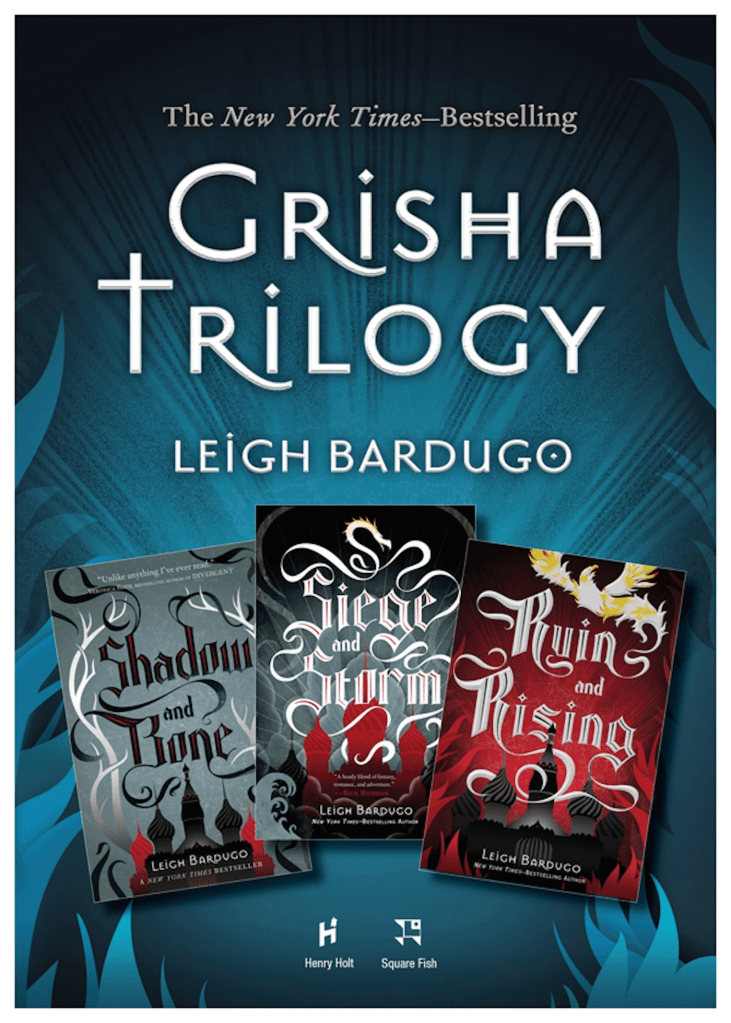
Shadow & Bone Trilogy by Leigh Bardugo (4/5)

I did a review for Shadow & Bone, but I wanted to do an overview for the entire series. I recommend this series for anyone who loves high fantasy with great world-building, fun twists, and questions of morality and fate. Also, anyone who has read Six of Crows first (like I did) and is underwhelmed by the first book, keep reading! I think it improves.

I actually enjoyed books 2 & 3 more than the first book. Part of this was the addition of Nikolai to the cast, but I think the characterization of all the characters improved, though I still prefer the characters in Six of Crows to anyone in Shadow & Bone. The message and writing grew stronger, as did the depth of emotion. The pacing for me improved as well.

Tropes You Might Want to Avoid

  1. Special Snowflake. You do still get the “special snowflake” trope with Alina in this series, which some people strongly dislike, but I think in this case it was done well. Especially after the first book. There’s a right way and a wrong way to do this trope–Leigh Bardugo does it right.
  2. The Scrawny, Not Pretty Girl. This one also improved after the first book, though it did annoy me in the very beginning. They make a point to tell us that Alina is skinny and unattractive, but this is kind of explained with the magic system so I forgive it. It’s not purely to make her seem more relatable.
  3. Love Triangles. Yes, plural. But it’s the type of love triangle where you know the whole time who she’s actually going to end up with and the other people are just vying for her attention. And really, the love triangles in this didn’t bother me. They didn’t exist for the mere purpose of creating drama. They made sense for the overall plot.

The tropes above are things that can annoy me when done poorly, but I think this series handles them all very well. If you seriously hate these tropes in all forms, then be forewarned.

Endings are the Hardest Part

I’ve read series where the ending didn’t measure up or actually angered me, but I genuinely love the ending of Rise & Ruin. Without spoiling, it’s one of those bittersweet “it couldn’t have ended any other way” endings. This book also made me cry a little, something that hasn’t happened with the last several books I read (which is saying something, because if anything is at all emotional it will probably make me cry).

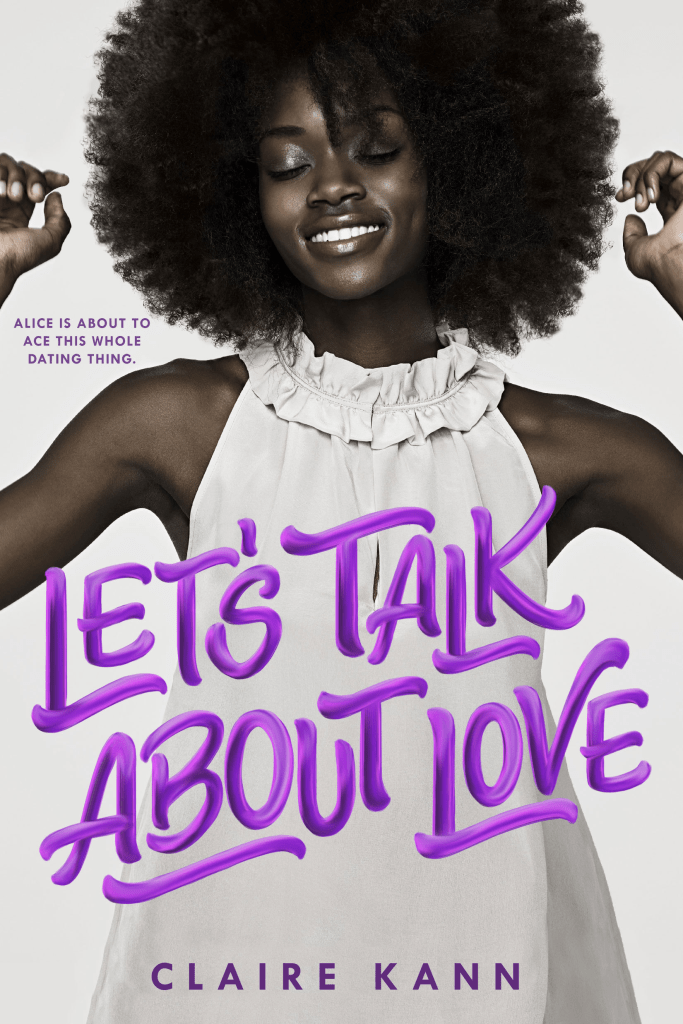
Analysis: Let’s Talk About Love

Let’s Talk About Love by Claire Kann (3/5)

This book is technically a two stars for me, but I added one because contemporary romance is usually not my genre. I read it because of the ace rep. There are a lot of angry reviews out there from other ace-spec people, and I’m relieved to say that I’m not one of them. There are some things I find concerning, but we’ll get there.

The Plot

The plot of this book feels like your typical romance. Girl meets boy. Girl likes boy, and boy maybe likes girl too. But neither tells each other that because people don’t talk to each other. The thing that makes it less typical is the asexuality of the main character. They tell us right from the start that she’s asexual. Her girlfriend breaks up with her in the first chapter because she doesn’t want to have sex. Not because she won’t, but because she doesn’t actually want to. Most of the book is mundane bonding interactions between the leads, with some drama between Alice and her friends thrown in. There’s also a conflict with her family about her not wanting to go to law school. I find this type of plot boring, but it might interest someone who likes cute, low stakes contemporary romances.

The Characters

Alice: Our protagonist is childish, awkward, and theoretically “cute,” although I’m not enamored with her. This might have something to do with the narration style more than Alice herself (more on that coming soon). Her personality is pretty much confined to pizza, TV shows, and… maybe books? She works in a library but I don’t remember her ever talking about liking to read books. She’s joined at the hip with her two best friends, who are dating each other. I feel like her being ace is brought up far too often, compared to her other identities as a biromantic black woman, but given the theme of this book I’ll let it slide. But for the record, I’m ace and I don’t spend nearly as much time thinking about being ace as she does.

Takumi: The love interest in this seems like a good person, but a somewhat boring one. Kind, thoughtful while expecting nothing in return, and apparently the prettiest person on the planet. I probably would like spending time around him in real life, but his character didn’t interest me.

Feenie: I strongly dislike Feenie, not because of her basic character traits necessarily, but the way she treats her best friend. I had a friend that was far too close to Feenie’s personality for comfort, and it went about the same way as this friendship, minus the make-up. Honestly, I wanted more from the “apology” between them. If you ask me, Feenie’s side of it was half-assed and too readily accepted. She basically said “I know I can be an asshole sometimes, oops.” But showed no intent to change the way she treats Alice, which was essentially ignoring her in favor of Ryan (Feenie’s boyfriend) and then getting pissed when Alice tries to form other friendships. As someone burned by a possessive friendship like this, it bothered me. There was a scene at a party–that Alice got talked into going to–where Feenie and Ryan go off to have sex and abandon Alice on her own, so she leaves with Takumi. Am I the only one who doesn’t see an issue with her choice to leave? I would have been livid if my friends abandoned me at a party I didn’t want to go to in the first place.

Ryan: Feenie’s boyfriend and Alice’s other best friend–in that order. He seems like a generally likeable person, but he has some of the same issues Feenie. He doesn’t hold a grudge quite as fiercely as his girlfriend, but he still acts like Alice paying attention to anyone but the two of them is blasphemy.

The Writing Style

This gets it’s own section because I hated it. It’s not the first time my opinion of a book has drastically dropped because I disliked the writing. I found the constant use of parentheses distracting and quite frankly annoying and childish.
(It’s partly because they were sentences on their own line inside parentheses for no reason I can see.)
(Multiple lines in a row like this. What’s the point?)
It happened almost every page and I just… really, really didn’t like it. You’ll notice I put stuff in parentheses several times in this review. Now multiple that by 5 and you have the narration style of this book.

The Ace Representation

The main character of Let’s Talk About Love is asexual and has known it for a while, though she’s not great at telling people. Only her best friends know, rather than… you know, her partner. She doesn’t even really tell her ex-girlfriend when they’re breaking up. I understand the fear of confessing this to the person you’re dating, since sometimes (often…) it can end in a break-up, because sex is something allosexual people want in their relationship. I don’t think there’s anything wrong with that, even if it is frustrating and heartbreaking for the asexual person. Alice spends most of the book avoiding talking to Takumi about her feelings for him and her asexuality, which is the source of the main conflict.

The Good: Some of the ace rep is actually very good. This book talks about what exactly ace means, the fact that it’s a spectrum, and how romantic attraction can be separate from sexual attraction. There are several scenes that hit painfully close to my own experiences/fears. I think it’s important to have that information out there, for people who don’t even know asexuality exists.

The Bad: As previously acknowledged, asexuality is a spectrum. Ace-spec people can range from sex repulsed to enjoying sex but not requiring it as a fundamental part of their romantic relationships. I think Alice falls somewhere in the “not sexuality attracted to people but doesn’t absolutely hate sex range.” She just doesn’t care about it. My main issue with the ace rep in this book happens when Alice first meets Takumi. She experiences arousal for the first time, and then freaks about because she doesn’t know what that means for her asexuality. They later try to explain this away as “arousal and sexuality attraction are different.” I’m not an expert (as I’ve never experienced it), but wouldn’t being aroused by a specific person be sexual attraction? Someone correct me if I’m wrong.

I’m not saying this couldn’t be someone’s personal experience, but it plays dangerously into the ridiculous insistence that asexuals “haven’t met the right person yet.” The fact that Alice has never experienced this reaction to someone, and then Takumi walks in and, ope the “plumbing is on.” After this, the book holds true to Alice’s lack of desire for sex, regardless of her reaction to Takumi, but it felt so unnecessary and far too close to something most asexual people have heard too many times. Why not just have her completely not experience that reaction in response to other people? Especially when there’s so little ace rep out there. I would be more okay with it if more examples existed, so we could get a broader spectrum, but in the meantime I think it’s best to stay away from ideas that perpetuate misconceptions.

My other (smaller) concern has to do with Takumi being allosexual and accepting that his relationship with Alice might never involve sex. Again, I’m not saying this couldn’t happen, but it’s unlikely. Most people who want sex… want sex in their relationships. Like many romance stories, it sets unrealistic expectations and needs to be acknowledged. Many of us romantically-inclined ace people dream that someone might love us enough to give up sex, but the sad truth of it is most wouldn’t.

Conclusion

So… did I like this book? No. Did I hate it? Also no. I didn’t like the main character or the writing style, and I’m often bored by contemporary romance, but I don’t think it’s a bad book. It has some questionable moments and some of the asexual representation makes me uncomfortable, but I still appreciate there being a book out there that brings asexuality onto people’s radars.

As a side note, I haven’t been able to diagnose whether the author is on the ace spectrum. I’ve read interviews that are super vague about it, even though this book is listed as #OwnVoices. I know that people aren’t obligated to share their sexuality with the public, but when you’re writing a book about asexuality… I feel like it becomes the exception. I strongly believe if you’re writing a book that is focused on a specific identity, you should share that identity (having an ace main character is different than a book about being ace). If anyone has found a concrete answer one way or another, please let me know.

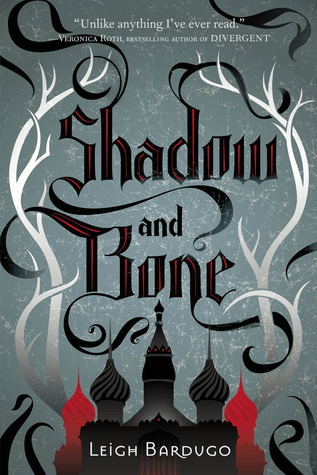
Analysis: Shadow & Bone

Shadow and Bone by Leigh Bardugo (3/5)

This review will be colored by the fact that I read Six of Crows before it, because yes, I’m that person who read Six of Crows first because I heard it was better.

And you know what? They were right.

I almost didn’t even read this series because I didn’t want to be disappointed, but I finally decided to take the plunge. Ultimately, S&B isn’t bad. It’s just not Six of Crows. The world building is solid, because… you know, it’s the same world. It’s interesting seeing things mentioned in passing that I know a decent amount about already, like the different countries other than Ravka. I was kind of confused at one piece of world building—the amplifiers. We meet multiple living amplifiers, but she makes it sound like creatures like the stag have to be killed for their power? Are all amplifiers potentially useful alive, or is it only a specific set? She did refer to the Darkling and Baghra as “living amplifiers.” I feel like this could have been explained better, but I’m assuming we’ll learn more in the next two books.

I was pretty unimpressed with the characters, especially after falling in love with all six of the Crows. Alina is your typical special snowflake who doesn’t want the power and responsibility that has been thrust upon her. She checks some of my disliked tropes, but I forgave one of them because there was a legitimate reason for it. She makes a point to tell us that Alina is skinny and sickly and most certainly not pretty, but it’s because not using Grisha power has detrimental effects. So, fine. I’ll allow it.

Mal was just okay. He was charming at times but honestly I hope we get more of a personality from him in later books. Even Genya, who I enjoyed in the TV show adaptation, didn’t captivate me as much as I expected. The romance between the Darkling and Alina might be a red flag for some people, given that he’s hundreds of years old and she’s a teenager. It didn’t bother me because YA fantasy has broken me.

Unsurprisingly, the Darkling was my favorite character, because who doesn’t love a powerful, ancient, incredibly hot mysterious bad guy?

I felt like not much happened until halfway through this book. I recognize on the surface level that stuff did happen in the first half, but none of it was particularly exciting. Mostly Alina lamenting her new situation and failing to use her power. Once we passed the halfway mark, I actually started to enjoy it a lot more. The story from there was faster paced and more eventful, right up to the rather abrupt ending. I dislike when stories just end without any wrap-up, which is ironic since it’s something I had to actively combat in my own writing. Then there was the very odd creative choice of writing the prologue and epilogue (titled “before” and “after”) in third person, referring to the main characters as “the boy” and “the girl.” It read so awkwardly that my brain thought it was written in present tense too, until I went back to verify and realized it was past tense (for those who don’t know I have a strong disliking for 3rd person present tense). I didn’t care for it.

Overall, I liked it enough that I’m going to read the next one, so stay tuned!

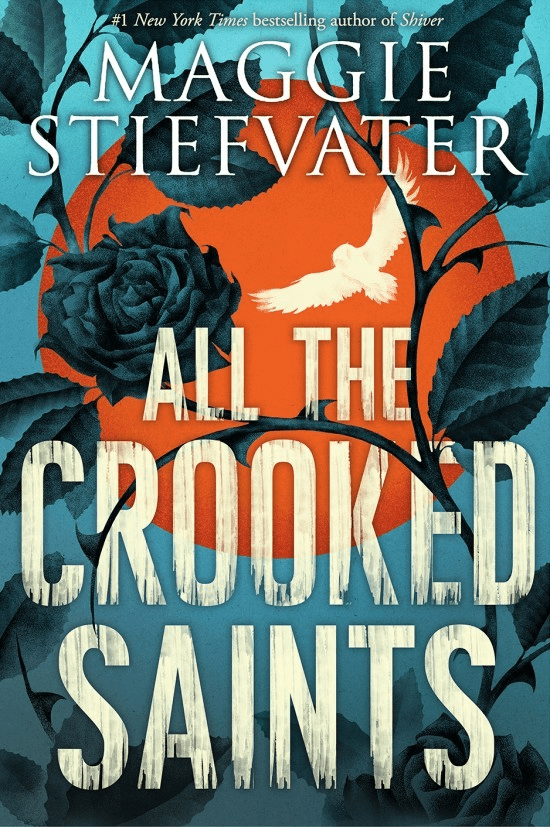
Review: All the Crooked Saints

All the Crooked Saints by Maggie Stiefvater (4/5)

I’m a fan of Stiefvater’s other works (the Raven Boys and Shiver), so I had cautiously high expectations going into this one. It admittedly has a very slow start, and despite the fact that I tend to enjoy her highly metaphorical writing style, it took me several chapters to get into it. There was a fair amount of telling us things, about the characters or exposition for the world, an issue I don’t remember from other books I’ve read by the author. There were also some “what on earth is going on” moments from me at first.

Once I got past the beginning and into the actual plot, I found I really enjoyed the premise and the lore established by the world. The Soria family has the ability to make the “darkness” that lives inside people tangible. They call this a “miracle,” but ultimately it’s more like the pilgrims that come to the Sorias end up cursed and then have to break that curse by understanding whatever their darkness means. This idea is what I loved the most about the book.

I never got very invested in the characters, even though I liked them on the surface level. They were interesting people with depth and personality, but I didn’t run gushing to anyone about Beatriz or Daniel or the romantic subplots. It might have been the omniscient POV that left me feeling a little disconnected from the characters? I’m not sure.

All the same, I enjoyed my read and recommend it to anyone who liked other books by Maggie Stiefvater. I wouldn’t recommend this as your first one by her.

Review: Six of Crows

Six of Crows/Crooked Kingdom by Leigh Bardugo (5/5)

Review written upon re-read 2 years after first read.

A high fantasy heist story…. When I hear those words, it sounds like the YA version of one of my favorite books (shout-out to Mistborn by Brandon Sanderson). I was not disappointed. Six of Crows is everything I crave in a book. A plot with clever twists and turns and plans going horribly wrong. A fun magic system (although the magic plays a fairly small role in the story, compared to some high fantasy novels).

But most of all, it has wonderfully diverse and deeply flawed characters. Most of them are criminals who have done highly questionable things. They’ve robbed people, hurt people, killed people. Yet they’re so richly developed that we can’t help but love them and root for them. When I say diverse, I’m not just talking about ethnicity. Sexualities, neurodivergence, addictions, trauma, and phobias. I adore every single one of the main six, and honestly it’s difficult to pick a favorite. I love them for different reasons.

On top of amazing characters, it’s a heist story with magic. What more could I ask for?

I spent way too long trying to write this review, thinking of all the good things I could say about it. In the end, I decided to keep it short and leave you with this: I recommend this book to anyone who loves fantasy, intricate characters, and clever heists.

PS. I have to note that I was furious about the ending of this duology when I first read it, and my anger has not dimmed upon the reread. Everything else in it is so good but fair warning without spoiling anything, the a piece ending left me with the urge to throw the book at the wall. It’s one of those what’s the point? moments for me.

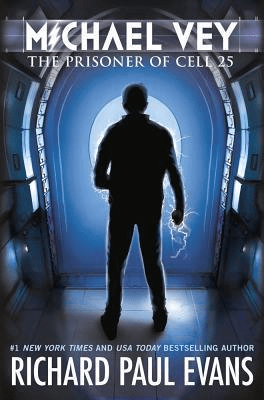
Review: Michael Vey

The Prison of Cell 25 by Richard Paul Evans (2/5)

Michael Vey suffers from “great premise, poor execution” syndrome. I really love the idea behind it, that there are these kids who were changed by science gone wrong. I love seeing magic given a scientific basis. It could have been a great book, if not for the mediocre writing. It felt very childish and flat to me. We were told very directly that characters (usually Taylor…) started crying, with no emotion attached to it.

“Hearing this made her heart ache. Taylor began to cry.”
“Suddenly a painful, high-pitched squeal tore through Taylor’s head. She started crying.”
(and two pages later) “Taylor tried to keep from crying.”

One of my personal dialogue peeves popped up a few times as well, though it was worst in one scene and didn’t annoy me quite as much from there on out. I hate it when characters say each other’s names constantly when they’re talking to each other, and there’s this one scene with Michael and his mom that had me ready to throw in.

“Michael, I know it’s not easy being different. I don’t blame you for feeling this way. It’s just that most people can’t understand your special gift.”
“You think this is a gift, Mom? It’s not.”
“Michael, don’t say that.”

Michael, Michael, Michael…. She says his name seven times in this conversation, and he says “Mom” just as many. No one does that.

Then there’s the conversation between Michael and his mom about what gift Michael should give Taylor for her birthday. Mom says, “Trust me, we’re all the same. We like clothes and jewelry. And flowers.”

Excuse me?

The story did get more engaging toward the end, when things actually started happening. I felt like the plot didn’t really start until about a third of the way through the book, when his mom gets kidnapped (that’s right, folks, it’s in the blurb and it happens over 100 pages into the book). Honestly, I couldn’t tell you what happened in those first 100 pages. Not a whole heck of a lot.

The characters were also uninteresting to me. They felt like stereotypes without much depth, and while I didn’t hate any of them, I didn’t get attached either. Apathy is almost worse than hate somehow. Michael is the small, weird kid that gets bullied a lot because he can’t defend himself (in his case because he can’t reveal his powers). Ostin (who by the way it felt very weird that they made a big deal about people calling him other cities in Texas? Austin is not an uncommon name) is his overweight best friend who I think was supposed to offer some comic relief, but I wasn’t feeling it. Taylor is a cheerleader, the prettiest, most popular girl in school. I’m okay with meeting characters who fit certain cliches, as long as you delve deeper or, even better, subvert the trope. This book just… didn’t. As a very character-driven reader, boring characters knocks off a full two stars for me most of the time. The most interesting character was the villain, who I will give Evans props for. He’s wonderfully awful.

This book might have been helped a little by aging down the characters and placing it firmly in middle grade instead of trying to call it YA. The characters felt like they were in middle school most of the time anyway.

Overall, I was just bored with the characters and the slow start. The Prisoner of Cell 25 had a lot of potential, but it didn’t follow through for me.

Review: Intertwined

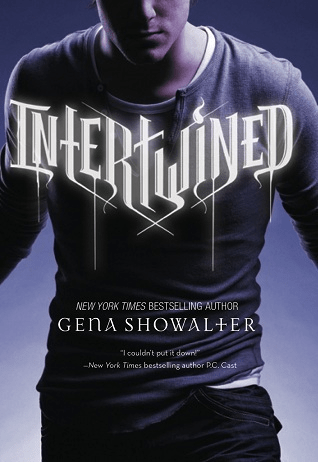
Intertwined by Gena Showalter (1/5)

I really wanted to enjoy this book based solely on the premise, which is really interesting, but I struggled so hard to get through it. I considered stopping halfway through the book but a mild curiosity kept me going. The plot is probably the best part of it, and even that was kind of… meh.

I couldn’t bring myself to really care about any of the characters. There was so little emotion in this book. All of the relationships (romantic and platonic) felt too instant and dramatized, with zero chemistry even as the book progressed.

I’m also very confused by Aden’s characterization. He doesn’t seem like an inherently violent person, but he still feels this need to punch people when they threaten them, which seems odd to me. Even for a teenage boy. He goes straight from “I really don’t want to fight anyone” right to “this person is going to think I’m a wuss so I guess I’ll beat him half to death.” I feel like sometimes he does things to create drama/further the plot rather than out of any adherence to who he is as a character.

He’s also kind of an idiot. I get it that this is YA and I’m used to the main characters making rash decisions or processing things a bit slow. But he’s very slow. He even calls himself out on it at least once. “How had he not reasoned it out?” More importantly, how did the four other people in his head not figure it out? Especially the one who can raise the dead. It’s one thing to put clues together and figure it out before the characters, but when there’s so many clues and you’re bored because you’ve been waiting too long for the characters to put it together…. That’s when it gets irritating.

I want my books to make me laugh, cry, maybe get a little angry. I unfortunately spent this book swinging between bored and annoyed.

For an in-depth review of my thoughts on this book, check out my analysis on Intertwined.

Review: The Selection

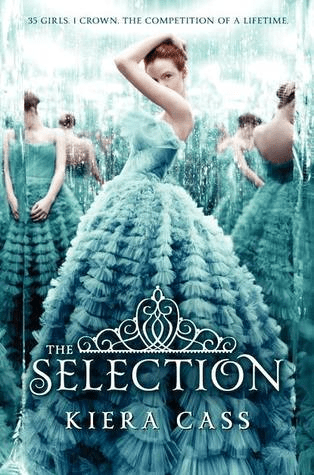
The Selection by Kiera Cass (1/5 DNF)

I couldn’t even get past chapter six of this book. Even if I could get past the highly questionable names, the dialogue drove me crazy (call it a pet peeve, but I hate it when people say the other person’s name ten times during a conversation) and I realized there were better things I could be reading. A read through of some other reviews and I decided it wasn’t worth it. If you hate the names America Singer and Aspen (love it for a girl, not so much for a boy) and the aforementioned dialogue “style,” I don’t recommend this book.

Review: As You Were

As You Were by Tasha Christensen (4/5)

Despite the fact that this isn’t my normal genre (I usually prefer something fantastical in my stories) I really liked this book. It was a fun, easy read that I blew through in a few days.

It broke my expectations and assumptions I had going in, which was nice to experience. I definitely think someone with a background in band (present or past) would find certain parts more interesting than I did. I kind of skimmed through those sections to get back to the story, which is fine.

Hannah, our ambitious protagonist, is rather driven and single-minded sometimes–and suffers the potential pitfalls of that–which I think is relatable for many teens out there. Not for me, of course. I had no ambition in high school.

I finished this book wanting to know more about the other characters. We get a taste of their backgrounds and their personalities, but I wanted so much more, particularly for Hannah’s best friend. I believe this is intended as a series, though, so maybe I’ll get my wish with the next one. I praise the presence of an ace character, but it’s only mentioned in passing. Please give me more of her!

I did get teared up a bit near the end, in a “I’m so proud” sort of way, so kudos to the author. But then again, almost everything makes me cry so if it doesn’t it’s either not meant to be emotional or you’re doing something very wrong.

Recommend for band geeks and anyone looking for a sweet story that pursues the question of “what really matters in life, and what isn’t worth sacrificing to get what you want?”