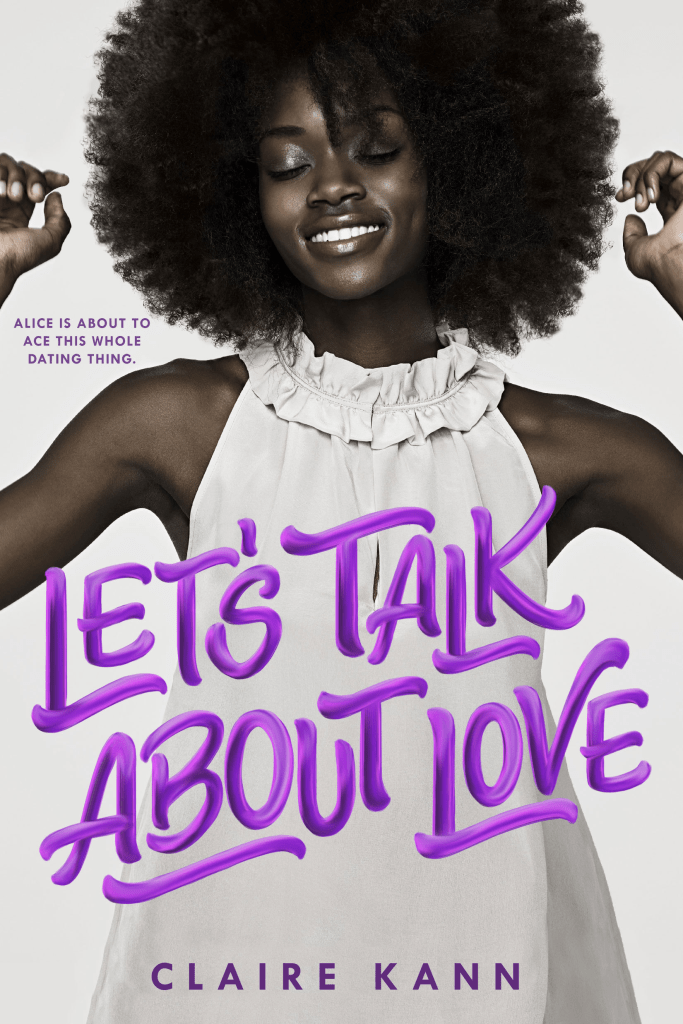
Analysis: Let’s Talk About Love

Let’s Talk About Love by Claire Kann (3/5)

This book is technically a two stars for me, but I added one because contemporary romance is usually not my genre. I read it because of the ace rep. There are a lot of angry reviews out there from other ace-spec people, and I’m relieved to say that I’m not one of them. There are some things I find concerning, but we’ll get there.

The Plot

The plot of this book feels like your typical romance. Girl meets boy. Girl likes boy, and boy maybe likes girl too. But neither tells each other that because people don’t talk to each other. The thing that makes it less typical is the asexuality of the main character. They tell us right from the start that she’s asexual. Her girlfriend breaks up with her in the first chapter because she doesn’t want to have sex. Not because she won’t, but because she doesn’t actually want to. Most of the book is mundane bonding interactions between the leads, with some drama between Alice and her friends thrown in. There’s also a conflict with her family about her not wanting to go to law school. I find this type of plot boring, but it might interest someone who likes cute, low stakes contemporary romances.

The Characters

Alice: Our protagonist is childish, awkward, and theoretically “cute,” although I’m not enamored with her. This might have something to do with the narration style more than Alice herself (more on that coming soon). Her personality is pretty much confined to pizza, TV shows, and… maybe books? She works in a library but I don’t remember her ever talking about liking to read books. She’s joined at the hip with her two best friends, who are dating each other. I feel like her being ace is brought up far too often, compared to her other identities as a biromantic black woman, but given the theme of this book I’ll let it slide. But for the record, I’m ace and I don’t spend nearly as much time thinking about being ace as she does.

Takumi: The love interest in this seems like a good person, but a somewhat boring one. Kind, thoughtful while expecting nothing in return, and apparently the prettiest person on the planet. I probably would like spending time around him in real life, but his character didn’t interest me.

Feenie: I strongly dislike Feenie, not because of her basic character traits necessarily, but the way she treats her best friend. I had a friend that was far too close to Feenie’s personality for comfort, and it went about the same way as this friendship, minus the make-up. Honestly, I wanted more from the “apology” between them. If you ask me, Feenie’s side of it was half-assed and too readily accepted. She basically said “I know I can be an asshole sometimes, oops.” But showed no intent to change the way she treats Alice, which was essentially ignoring her in favor of Ryan (Feenie’s boyfriend) and then getting pissed when Alice tries to form other friendships. As someone burned by a possessive friendship like this, it bothered me. There was a scene at a party–that Alice got talked into going to–where Feenie and Ryan go off to have sex and abandon Alice on her own, so she leaves with Takumi. Am I the only one who doesn’t see an issue with her choice to leave? I would have been livid if my friends abandoned me at a party I didn’t want to go to in the first place.

Ryan: Feenie’s boyfriend and Alice’s other best friend–in that order. He seems like a generally likeable person, but he has some of the same issues Feenie. He doesn’t hold a grudge quite as fiercely as his girlfriend, but he still acts like Alice paying attention to anyone but the two of them is blasphemy.

The Writing Style

This gets it’s own section because I hated it. It’s not the first time my opinion of a book has drastically dropped because I disliked the writing. I found the constant use of parentheses distracting and quite frankly annoying and childish.
(It’s partly because they were sentences on their own line inside parentheses for no reason I can see.)
(Multiple lines in a row like this. What’s the point?)
It happened almost every page and I just… really, really didn’t like it. You’ll notice I put stuff in parentheses several times in this review. Now multiple that by 5 and you have the narration style of this book.

The Ace Representation

The main character of Let’s Talk About Love is asexual and has known it for a while, though she’s not great at telling people. Only her best friends know, rather than… you know, her partner. She doesn’t even really tell her ex-girlfriend when they’re breaking up. I understand the fear of confessing this to the person you’re dating, since sometimes (often…) it can end in a break-up, because sex is something allosexual people want in their relationship. I don’t think there’s anything wrong with that, even if it is frustrating and heartbreaking for the asexual person. Alice spends most of the book avoiding talking to Takumi about her feelings for him and her asexuality, which is the source of the main conflict.

The Good: Some of the ace rep is actually very good. This book talks about what exactly ace means, the fact that it’s a spectrum, and how romantic attraction can be separate from sexual attraction. There are several scenes that hit painfully close to my own experiences/fears. I think it’s important to have that information out there, for people who don’t even know asexuality exists.

The Bad: As previously acknowledged, asexuality is a spectrum. Ace-spec people can range from sex repulsed to enjoying sex but not requiring it as a fundamental part of their romantic relationships. I think Alice falls somewhere in the “not sexuality attracted to people but doesn’t absolutely hate sex range.” She just doesn’t care about it. My main issue with the ace rep in this book happens when Alice first meets Takumi. She experiences arousal for the first time, and then freaks about because she doesn’t know what that means for her asexuality. They later try to explain this away as “arousal and sexuality attraction are different.” I’m not an expert (as I’ve never experienced it), but wouldn’t being aroused by a specific person be sexual attraction? Someone correct me if I’m wrong.

I’m not saying this couldn’t be someone’s personal experience, but it plays dangerously into the ridiculous insistence that asexuals “haven’t met the right person yet.” The fact that Alice has never experienced this reaction to someone, and then Takumi walks in and, ope the “plumbing is on.” After this, the book holds true to Alice’s lack of desire for sex, regardless of her reaction to Takumi, but it felt so unnecessary and far too close to something most asexual people have heard too many times. Why not just have her completely not experience that reaction in response to other people? Especially when there’s so little ace rep out there. I would be more okay with it if more examples existed, so we could get a broader spectrum, but in the meantime I think it’s best to stay away from ideas that perpetuate misconceptions.

My other (smaller) concern has to do with Takumi being allosexual and accepting that his relationship with Alice might never involve sex. Again, I’m not saying this couldn’t happen, but it’s unlikely. Most people who want sex… want sex in their relationships. Like many romance stories, it sets unrealistic expectations and needs to be acknowledged. Many of us romantically-inclined ace people dream that someone might love us enough to give up sex, but the sad truth of it is most wouldn’t.

Conclusion

So… did I like this book? No. Did I hate it? Also no. I didn’t like the main character or the writing style, and I’m often bored by contemporary romance, but I don’t think it’s a bad book. It has some questionable moments and some of the asexual representation makes me uncomfortable, but I still appreciate there being a book out there that brings asexuality onto people’s radars.

As a side note, I haven’t been able to diagnose whether the author is on the ace spectrum. I’ve read interviews that are super vague about it, even though this book is listed as #OwnVoices. I know that people aren’t obligated to share their sexuality with the public, but when you’re writing a book about asexuality… I feel like it becomes the exception. I strongly believe if you’re writing a book that is focused on a specific identity, you should share that identity (having an ace main character is different than a book about being ace). If anyone has found a concrete answer one way or another, please let me know.
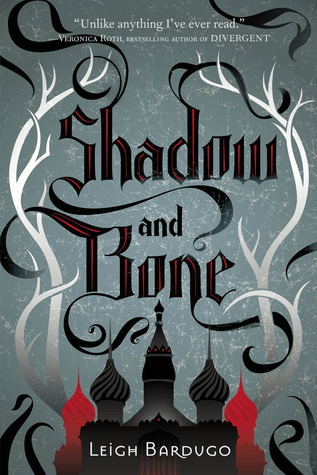
Analysis: Shadow & Bone

Shadow and Bone by Leigh Bardugo (3/5)

This review will be colored by the fact that I read Six of Crows before it, because yes, I’m that person who read Six of Crows first because I heard it was better.

And you know what? They were right.

I almost didn’t even read this series because I didn’t want to be disappointed, but I finally decided to take the plunge. Ultimately, S&B isn’t bad. It’s just not Six of Crows. The world building is solid, because… you know, it’s the same world. It’s interesting seeing things mentioned in passing that I know a decent amount about already, like the different countries other than Ravka. I was kind of confused at one piece of world building—the amplifiers. We meet multiple living amplifiers, but she makes it sound like creatures like the stag have to be killed for their power? Are all amplifiers potentially useful alive, or is it only a specific set? She did refer to the Darkling and Baghra as “living amplifiers.” I feel like this could have been explained better, but I’m assuming we’ll learn more in the next two books.

I was pretty unimpressed with the characters, especially after falling in love with all six of the Crows. Alina is your typical special snowflake who doesn’t want the power and responsibility that has been thrust upon her. She checks some of my disliked tropes, but I forgave one of them because there was a legitimate reason for it. She makes a point to tell us that Alina is skinny and sickly and most certainly not pretty, but it’s because not using Grisha power has detrimental effects. So, fine. I’ll allow it.

Mal was just okay. He was charming at times but honestly I hope we get more of a personality from him in later books. Even Genya, who I enjoyed in the TV show adaptation, didn’t captivate me as much as I expected. The romance between the Darkling and Alina might be a red flag for some people, given that he’s hundreds of years old and she’s a teenager. It didn’t bother me because YA fantasy has broken me.

Unsurprisingly, the Darkling was my favorite character, because who doesn’t love a powerful, ancient, incredibly hot mysterious bad guy?

I felt like not much happened until halfway through this book. I recognize on the surface level that stuff did happen in the first half, but none of it was particularly exciting. Mostly Alina lamenting her new situation and failing to use her power. Once we passed the halfway mark, I actually started to enjoy it a lot more. The story from there was faster paced and more eventful, right up to the rather abrupt ending. I dislike when stories just end without any wrap-up, which is ironic since it’s something I had to actively combat in my own writing. Then there was the very odd creative choice of writing the prologue and epilogue (titled “before” and “after”) in third person, referring to the main characters as “the boy” and “the girl.” It read so awkwardly that my brain thought it was written in present tense too, until I went back to verify and realized it was past tense (for those who don’t know I have a strong disliking for 3rd person present tense). I didn’t care for it.

Overall, I liked it enough that I’m going to read the next one, so stay tuned!

How to Train Your Dragon – Book & Movie

As a long-time fan of the How to Train Your Dragon movie trilogy (as well as a fan of David Tennant, who narrates the audiobook), I felt obligated to finally listen to the book the movie was based on. I use “based on” loosely, because while there are dragons and Vikings, some of the names are the same, and there’s a similar theme, that’s about where the similarities end.

This review will mostly be a comparison between the movie and books and whether or not one (in my humble opinion) is better, and if so why.

Some Major Differences (and why it makes them difficult to compare)

Both book and movie tell the story of Hiccup, the self-proclaimed unheroic son of a Viking chief, and Toothless, a dragon. Over the course of both stories, Hiccup bonds with Toothless and together they learn how to become a true hero (“the hard way,” as the book puts it).

The first incredibly huge different that struck me was the age of Hiccup, who is ten years old in the book, versus his teenage counterpart in the movie. Older characters usually means a slightly different tone and themes, as well as something that is more likely to speak to me as a consumer of the media. I definitely enjoy middle grade stories and chapter books from time to time, but (as anyone who has read my other reviews might have noticed) my main genre is YA. Related to this, I was disappointed in the lack of female characters in the book. It was clearly aimed at boys, and the age of Hiccup means a love interest wouldn’t make much sense, but really the only female we see is Hiccup’s mother, who doesn’t get much page time. All of the youngsters like Hiccup are boys. Where are my badass girl Vikings???

The other staggering difference that changes the course of the story right from the start is the fact that, in the book, the Vikings don’t kill dragons. They aren’t mortal enemies. The dragons serve as creatures that help the humans with fishing and fighting, and given the fact that they are a clearly intelligent species treated like simple beasts, are basically enslaved by Hiccup’s people. Hiccup’s goal in the book is to capture and train his first dragon, only he uses different methods. Instead of yelling Toothless to force his will upon the dragon, Hiccup tells Toothless jokes as a reward for listening, which was very quirky and adorable. There’s also the odd and somewhat amusing fact that the dragons have their own language, dragonese, and for some reason Hiccup is the only person who speaks it. It’s never explained how Hiccup learned to speak this dragon language, but I tried not to dwell on it.

Night Furies Don’t Exist?

Apparently, the Night Fury is a species of dragon invented by the creators of the movie, because Toothless is referred to as a “common or garden dragon” (he’s actually a different species entirely, but we don’t find that out until much later). He’s also tiny, both because the common dragons in this world tend to be smaller than those portrayed in the movie and because he’s just small for his kind, which makes him the dragon version of Hiccup.

In this way, the book and movie diverge from each other rather significantly. Something that I personally love about movie Toothless is the fact that he’s an incredibly rare, mysterious, and powerful species (though he subverts the awe the Vikings hold for his species by proving himself to be goofy and adorable). He’s almost a foil to Hiccup character, who is scrawny, clumsy, and basically useless as far as the rest of his tribe is concerned. In truth, Hiccup is courageous, determined, and strong in his capacity to care for others. They are portrayed as both the same in many ways but opposites in others, as most great friends are.

I’m not going to say that either of these is necessarily better, but they do set up a very different relationship between boy and dragon.

Why the Movie is Ultimately Better

I can’t say that I’m not biased, given that I watched the movie first and fell in love with it long before reading the book, but I think there are a few solid reasons the movie surpasses the book in terms of story—never mind the incredible animation and soundtrack of the film.

I personally feel that the war between the dragons and Vikings is more powerful than the scenario set up in the book. It means that Hiccup befriending a dragon is not only unusual, but a betrayal of everything they stand for. Hiccup is a traitor to his people, not just weird for trying to train his dragon basically through positive reinforcement rather than bullying it.

One of the things I love about the movie is the amount of emotion that they packed into the story, and I just didn’t get that same depth in the book. The relationship between Hiccup and his father is infuriating, heartbreaking, and (by the end) touching. The bond between Hiccup and Toothless is inspiring and heartwarming. I can’t get through the movie without crying. Both the imagery (the iconic scene where Hiccup holds out his hand to Toothless) and dialogue (Hiccup screaming “for once in your life just listen to me!”) really make you feel every moment. While these relationships technically exist in the book, I didn’t feel them on the same level.

I think the filmmakers took an interesting concept and a fun story and turned it into something beautiful, simultaneously heartwarming and heart-wrenching. Not to mention no small amount of humor. The book did have amusing moments, but I didn’t walk away with iconic quotes I’ll spew at anyone whether they’ll get the reference or not. There are just so many layers to the movie, like the clever use of mirroring, that were absent from the book. I feel the need to expand on this last bit, to really get my point home on why this is important to me.

The Genius of Mirroring

The How to Train Your Dragon film does something fascinating, if you’re paying enough attention, or if you’ve seen it 500 times like I have. They use repeated dialogue to highlight key moments in the film, as well as adding some comedic effect. The callback to earlier points in the movie accentuate changes over the course of the plot, especially in terms of character development. I’ll outline a few examples.

1. “You just gestured to all of me.” Hiccup says this line multiple times in the movie. At the very beginning, just after the disastrous raid by the dragons, Gobber gestures at him and says, “You need to stop all… this.” Indicating that basically everything about Hiccup is wrong and needs to change. When Hiccup wakes up after the final battle, his father does the same thing, only his line is, “Turns out all we needed was a little more this.” This highlights the 180 in the way Hiccup’s tribe views him—from a complete disappointment to a savior.

2. “I did this.” This regret-filled line is spoken by Hiccup after shooting Toothless out of the sky and later by his father when he thinks Hiccup died during the battle with the dragon queen. It shows them reach a similar point in their character journey at different times, both of them realizing their actions have caused irreparable harm, a moment that sets them on a new path.

3. “This is Berk.” Perhaps the most obvious example of this mirroring is Hiccup’s speeches at the very beginning and end of the movie. He introduces Berk as not a very pleasant-sounding place in both parts of the movie, with one key change. In the beginning, dragons were pests. At the end, they were pets. It so perfectly frames the transition from the time when dragons were hated and feared to when they became beloved and an integral part of the tribe’s lifestyle—a transition that is entirely thanks to a boy who wouldn’t kill a dragon.

And That’s the Whole Story

How to Train Your Dragon, both movie and book, tells Hiccup’s journey from useless to hero. But the real key difference? In the book, Hiccup befriends his dragon instead of dominating him, which leads to them being able to save the day because Toothless cared enough not to abandon Hiccup in his time of need. In the movie, the duo ends a war between Hiccup’s tribe and the dragons.

And what’s more heroic than finding the courage and persistence to change people’s hearts and minds?

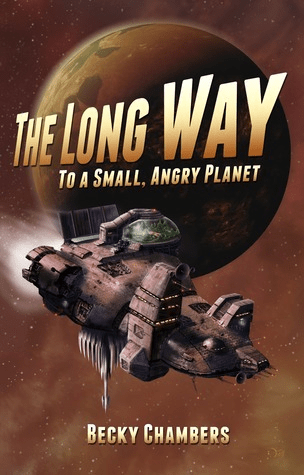
Analysis: The Long Way

The Long Way to a Small, Angry Planet by Becky Chambers (4/5)

I was pleasantly surprised by this book, which I read because a friend recommended it. Space opera is usually not my go-to genre, though I wouldn’t say I dislike it. I enjoyed the (original) Star Wars movies and some other works in the genre, but it’s not something I seek out. I mention this because my review is from the perspective of someone who does not read widely in the genre.

Quick Spoiler-Free Review

Honestly this whole analysis won’t contain huge spoilers (there really… aren’t that many to give, as this book didn’t have much of what I would call “twists”) but I wanted to give a “should you read this book?” before I dive into it.

It boils down to World Building > Characters > Plot. If you read for the first two, you’ll probably enjoy it. If you enjoy a more plot-driven story, this will probably bore the hell out of you.

The Premise

The Long Way to a Small, Angry Planet is set in the distant future, where many different sapient species have formed the Galactic Commons, or the GC. The alliance seems overall like a decent organization, rather than the corrupt, over-bearing governing body I sometimes expect to see in futuristic worlds. They have their faults and are clearly driven in part by greed, but they don’t do anything overtly horrendous.

The Wayfarer is a tunneling ship, which basically punches holes through space to connect distant points to make interstellar travel faster. Physics is not my forte, and honestly their actual job is only important at the beginning and very end of the book, so we’re going to leave it at that. They’re hired for the job of a lifetime, a “long haul” worth a lot of money, and thus they start their very long journey to a small, angry planet….

The World Building

This has to be my favorite part of The Long Way. The thoroughness of thought that went into building the different alien species is wonderful to see. They have unique and intriguing biologies and cultures that, for the most part, were introduced with enough grace that it rarely felt like info-dumping. Some had more development than others, with more attention focused on the species that made up the Wayfarer’s crew (which makes sense). I won’t go into immense detail about all of them, but I wanted to highlight some aspects of certain species that I really appreciated.

Grums: This dying species has a tragic story that I fear is the fate that awaits humanity (real humanity, not the humans in this book). They killed each other to the point of near extinction, and I’ve inferred that no females of the species remain, though I don’t think it’s ever outright stated. Our Grum character implies that their species will die out, but this could be related to simple lack of numbers or a collective agreement to stop breeding. They have a fascinating life cycle, where they are born female and transition to male later in life, a feat of biology that is indeed present in some species found on earth (mainly certain types of fish, though perhaps others I’m not aware of). I love seeing these quirks of nature worked into fictional species. They also have interesting vocal cords that let them make more than one sound at once, requiring them to develop the skill of synchronizing their vocals to speak the human language.

Sianat Pairs: The defining characteristic of Sianat Pairs is that they have this virus that infects their mind, with some beneficial results. So beneficial that it has become a part of their culture and religion, and those who refuse the disease (or cure themselves of it) are considered heretics. The Whisperer, as they call it, enhances their minds so they see the world in ways others cannot, and it allows Navigators like Ohan to guide tunneling ships through the sublayer. Unfortunately, it also chops a solid century off their lifespan.

Aeluons: The main aspect of this species that I loved was their means of communication. They lack any natural ability to hear (which is never explained in evolutionary terms, something that disappointed me, as someone who loves evolution) and their major form of communication amongst one another is through their cheeks turning different colors. This is simply so unique and creative that I had to include it. They use technology to “hear”/communicate with other species.

Aandrisks: Their society more than biology is what’s fascinating about these beings. Described as being lizard-like in appearance (though referring to them as “lizards” is a slur), their culture is vastly different than humans. They are a promiscuous species (and I don’t mean that in a derogatory way), forming relationships with many others that likely won’t last the rest of their life. They aren’t raised by their biological parents, but rather a “hatch family” of elders who have decided they are ready to settle down and raise children. Then they choose their own “feather family,” made up of chosen others who they may or may not have a sexual relationship with. Essentially, their society is built around found family. They are extremely affectionate and lack anything resembling modesty, perfectly happy to “couple” out in the open.

The Characters

I really enjoyed the varied cast of the Wayfarer. Even other characters we meet along the way seem to have rich lives outside the orbit of the main plot and the central characters, which is what makes supporting characters feel real. Most of the crew isn’t lacking in personality and backstory, though most of them do fall short in terms of actual arcs and growth.

Rosemary (The Clerk): The actual main character of the story, Rosemary lands somewhere in the realm of a mediocre character for me. She has an interesting backstory that is hinted at (without any particular subtlety) and later confirmed. She seems like an intelligent, generally kind, and likable person, while still showing her own flaws, yet she never read with much real depth for me. She wasn’t a Mary Sue, but nothing made me fall in love with her.

Ashby (The Captain): Ashby the human has to be one of the least interesting characters in the story (other than Ohan, but that’s because they don’t get much page time), but he does serve his purpose. Ashby is a good captain, dedicated to his crew and their safety. He’s understanding and willing to listen, but firm and commanding when he needs to be. Unfortunately, Ashby lacks any characteristics that would make me attached to him, beyond perhaps a defining moment at the end where he tells the Parliament off for their short-sighted treaty. Compared to other complex captains in the genre (like Mal Reynolds) he’s simply okay.

Sissix (The Pilot): Our reliable Aandrisk pilot is one of the more openly emotional and affectionate characters. She’s courteous and goes out of her way to respect the customs of other species, while sacrificing her own needs. She loves the crew of the Wayfarer that has become her feather family, but they don’t fulfill the same needs an Aandrisk family would, which I imagine her mental health suffers for.

Ohan (The Navigator): Ohan is a Sianat Pair, and they might be the most interesting species and least interesting character. We just don’t see them for most of the book. They’re aloof by nature, which means you either don’t get to know that character or you force them into situations where they have to interact. Chambers chose the former.

Corbin (The Algaeist): Again, we don’t see as much of the anti-social Corbin as some of the other characters. He tends to the algae vats that… apparently the ship somehow runs on? I don’t know if this is existing/theoretical technology, but it’s never explained in any detail. Most of the crew dislikes him, especially Sissix, but he’s good at his job so they tolerate him. He has a bit of a character arc but it could have been a lot more captivating, given more attention.

Dr. Chef (exactly what he sounds like): Honestly, Dr. Chef is the character I most want to hang out with sometime. The Grum chef/doctor is pleasant company, offers comfort and wisdom when needed, loves food, and seems to be a deeply thoughtful person. I’d let him cook for me anytime, though I am dubious about these insects they eat. Just remove it from the shell first and I’m fine, kay thanks.

Jenks (The Comp Tech): Jenks is the kind of person any of us with limited self-esteem might aspire to be. He seems rather confident in his own skin, without any need to fix any shortcomings (sorry, I had to do the pun). His one Big Problem is that he’s in love with the ship’s AI, who thankfully loves him back, but this love comes with obvious issues for the two of them. While I recognize Lovey (the AI) as a person in her own right, she’s not getting her own section in this because her character is entirely tied to Jenks. She seems pleasant and helpful, as any good AI ought to be, but lacks any personality beyond the relationship she shares with the computer tech.

Kizzy (The Mech Tech): Oh, Kizzy. Sweet Kizzy. I knew I would love her from when she first stepped onto the page. She’s hyper, talkative, occasionally vulgar, often rash, and maybe a bit ditsy (she did drop a sandwich in the engine that one time). Above all, she has personality. She has flair. She’s full of life and love and makes mistakes and deals with self-doubt. I enjoyed every moment of Kizzy’s existence and wish only the best for her.

Ultimately, it’s the interactions between the main characters that I loved more than the characters themselves. Except Kizzy. I love Kizzy. The wholesome friendship between Kizzy and Jenks, the way Ashby and Sissix support and rely on each other, the hesitant development of something romantic(?) between Sissix and Rosemary. Even Corbin’s place amongst the crew, which is basically everyone hates him, is a dynamic that is brilliantly utilized when the other characters pull together to save him. They’re a family, and sometimes you can’t stand your family, but you’d do anything for them anyway. This is really a major (if not the major) theme of the story.

The Plot

So this is where this book lost a star from me. The story is heavily character-driven, which is usually okay with me, but this plot is so almost non-existent that it came close to losing me a few times. It’s a disjointed series of events that really don’t connect to each other at all, making it feel like an “adventure of the week” TV show episode rather than a linear plot. You could have switched up the order of 50% of the events in this book and it wouldn’t have changed the story. They make stops along the way to their destination, each of which tends to showcase a character (or a few) and result in some character development. There’s nothing inherently wrong with this, if you’re into that kind of thing, but I prefer some more continuity in my plots.

Final Thoughts

The main thing that kept me reading was the intricate world-building and curiosity surrounding the characters. The little isolated plot adventures were fun, but lacked the cohesion that tends to pull the reader from one chapter to another, and I never got that I’ll read just one more chapter feeling. However, I did thoroughly enjoy reading it anyway.

Also, it made me cry. Like a lot. Not heaving sobs but frequent water leaking from my eyes and lots of tissues needed. So, thanks for that Becky.

Final Note: It bothered me that Human was capitalized. That had to make it into this review somewhere. It’s a species, not a nationality. Exodans being capitalized makes sense, but you wouldn’t capitalize dog or horse or fish. By that logic, Aandrisk, Grum, and any other alien species shouldn’t have been either. I feel like fantasy and sci-fi authors feel the need to capitalize anything foreign or important sounding, so Human got capitalized along with the other aliens for consistency.

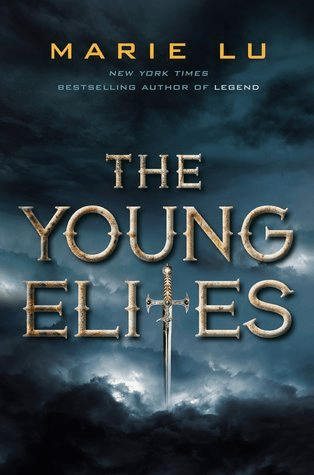
Analysis: The Young Elites

The Young Elites by Marie Lu (2.5/5)

Overall, I wanted to like this book more than I did. The idea of it is cool and the plot is solid(ish), but the characters fell short for me. There were also a few things that irritated me repeatedly, mainly revolving around the main character, Adelina.

The Premise

The novel is set in a fantasy world where a sickness known as the “blood fever” swept through the population, killing the adults and marring the children. The surviving children became known as malfettos, and some of them ended up with abilities. These became the Young Elites. The kingdom that serves as our main setting has mixed attitudes toward the malfettos, but the crown’s stance is definitely “malfettos are bad.” The Dagger Society, a group of Elites led by the exiled Prince Enzo, are attempting to get rid of the current rulers so he can take his place as king.

The Characters

Adelina: I’m somewhat fascinated by the main character in this novel. She has a darkness in her—bitterness, hatred, a thirst for power—that makes her intriguing for a young adult protagonist. The problem with her character is that the author leaned into it way too much. She kept telling us about Adelina’s “alignments” and the darkness inside her, instead of letting her actions speak for themselves. This is a case of the writer wanting to make sure their readers get the point so they beat that point to death, which always irks me. Trust your readers to understand. We deserve more credit than we get sometimes.

That being said, I do still like the idea of her character. I’m hoping that the next book will be more subtle about her character flaws and showing them to us instead of stating them outright. I’m also hoping she’ll get more of a character arc. Flawed characters are great because they have so much room to grow, but Adelina never makes progress. If anything, she gets worse, which I guess is still an arc—a villain origin story. That would be a fun twist.

Enzo: I honestly didn’t care for Enzo much. The exiled crowned prince and leader of a society of Young Elites could have been a great character. I didn’t hate him, but I was indifferent enough that his death didn’t affect me much. I felt bad for the people who cared about him, and his death marked the failure of all their plans, but the loss of Enzo himself? I feel like I might have cared a lot more if I knew anything about him. We get a taste of his past and small moments of vulnerability, but he feels fairly two-dimensional to me. As far as I can tell, his only goal is to take back the throne, which isn’t enough for me to root for him. He doesn’t even seem to care about the malfettos he claims he wants to protect. He’s let them die and killed others to further his goals, which makes him seem like just another tyrant to me. I’m not broken up about his death.

Teren: Our (slightly insane?) villain, Head Inquisitor, and a traitor to his own kind. Teren is a Young Elite, like the other characters, but his goal is to kill all of them. He sees himself and the others as abominations and seeks redemption in the eyes of the gods by destroying the Elites. He has the ability to heal himself almost instantly, which makes him annoyingly hard to kill. It also turns out that Teren and Enzo were friends growing up, which holds so little relevance in the overall story that I’m not sure why it’s in there. The lack of that little tidbit wouldn’t have changed much. It could have resulted in some emotional turmoil for both Teren and Enzo, since their goal is killing each other, but it… didn’t. I am excited to see where Teren’s story goes from here. He could have a great redemption arc (I have a weakness for redemption).

Raffaele: My favorite of the secondary characters, even though we really don’t get to know that much about him either. Raffaele has this calming, kind, but also mysterious presence that makes him an intriguing character. I found I cared most about what happened to him, so when he ends up in danger I tore through the next chapters to find out what happened to him.

Violetta: Adelina’s perfect younger sister who escaped being marked by the blood fever and was doted on by their father. I won’t say much about her because we really don’t know much, aside from her being the main source of inner conflict for Adelina. She has the potential to become my favorite character, depending on how the rest of the series plays out. I like the brief insight we get into her character, which is basically the knowledge that she never seemed to help Adelina avoid their father’s abuse but protected her the only way she knew how. More on that later.

The Daggers: We don’t get to learn much about the other Daggers. They have pretty surface level personalities with some potential, but not enough of the book is focused on them to form full-fledged characters. They’re just kind of there.

The Plot

This book started a bit slow. We get an exciting beginning, learning about how Adelina ended up headed to her execution, and then her subsequent rescue. One of the first things we know about Adelina is that she killed her father in a fit of fear and rage. And she didn’t really feel bad about it.

See what I mean about letting her actions speak for themselves? That’s all it takes for us to know she has some baggage to work through.

After that, it’s a bit sluggish as we learn about Adelina’s powers and the Dagger Society and meet the rest of the characters. Raffaele starts training her to use her powers, which is interesting for a little bit but for some reason got old. I’m not sure why I didn’t enjoy learning about the magic. I think that, as with Adelina’s character, the explanation and descriptions of their powers was heavy-handed. She talks about energy and “pulling” on the threads, which is cool, but frequently references drawing power from the darkness inside her and I think it bothered me. I don’t even want to count how many times we’re told about the darkness inside her or how she drawers her power from fury and fear. We get it.

When Teren finds her and threatens her sister’s life, that’s when the plot really starts rolling. Adelina finally has her motivation. She wants to save her sister, Violetta, and even considers betraying the people she wants to consider friends. Her struggle between loyalty to the Daggers and the desire to protect her sister is what drives the rest of the book. She goes back and forth between wanting to trust them with the truth, then deciding she can’t, which honestly I agree with. I’m pretty sure if she told them, they A) wouldn’t have helped her and B) might have killed her so she couldn’t turn against them. I don’t care if Enzo had a thing for her. They would have gotten rid of her the moment she became a threat.

Adelina slowly grows stronger and eventually becomes one of the Dagger Society. All the while still trying to figure out how she can save her sister without betraying them. Then she overhears one of the Daggers telling Enzo she can’t be trusted, so she freaks out and goes to Teren… because he’s so much better. She still decides not to betray the group that took her in and instead rescues her sister on her own. Turns out Violetta is also a Young Elite who has the ability to temporarily take away other people’s powers (and used this on her sister to suppress her abilities and keep her hidden, with the intention of protecting Adelina).

As the sisters run from Teren, we learn that the king is dead (assassinated by Teren) and the Inquisitors have basically been given free rein to dispose of all the malfettos in the city. A dark day for the poor survivors of a deadly disease. We also find out that Raffaele has been taken prisoner and Teren threatens to kill him if Enzo doesn’t come forward. To save Raffaele, Enzo challenges Teren to a duel that he can’t possibly win… except with Violetta’s help, obviously.

Adelina returns to the Daggers and they figure out Violetta can help them kill Teren, so the sisters help with the final plans to overthrow the king and queen. Except during the final fight, Adelina screws up and attacks Enzo, thinking he’s Teren, which gives Teren an opening to kill the prince. I will say, I did not see that coming, but they hint at a Young Elite who can bring people back from the dead. I’m pretty sure we haven’t seen the last of him (don’t know how I feel about this). Even though it was an accident, the Daggers decide they can’t trust Adelina and kick out of the group, which of course worsens the bitterness she carries.

Oh, yeah, and through all this there’s some kind of “romance” going on between Enzo and Adelina. More like he’s attracted to her because she looks like his dead fiancé. He tells her he knows who she is and he cares about her but I’m not sure I believe him. I guess we’ll never know, unless they bring him back. After meeting Princess Maeve (who brought her brother back to life) in the epilogue, I’m fairly certain that’s where this is headed. Because nothing could possibly go wrong there. I’m still pulling for a romance between Raffaele and Enzo, because their chemistry was infinitely better than Enzo/Adelina after only one scene with the two of them alone. Plus, Raffaele confirms that he loves Enzo. Please just give me that ship!

Final Thoughts

Ultimately, I would have liked this book a lot more if the characters were more developed and the author didn’t spend so much time telling us how dark and angry and afraid Adelina is. She could have cut so many words out of the book and then used that space to actually develop the other characters.

As perpetually irritated as I was, I am going to read the second book and see where it goes. I’m intrigued by where we’ll go from here (and whether Marie Lu will learn some subtlety). There’s so much potential here if the story gives all the characters the time and attention they need.

Analysis: Intertwined

Intertwined by Gena Showalter (1/5)

I don’t even really know where to start with unpacking this, so we’ll break it into categories. Honestly, this book bored me more than anything else, which I guess is better than making me angry in the “tempted to throw the book against the wall” sort of way.

The Premise

This is what makes me so sad. The premise is really interesting. The main character has four other people living in his head, each of them with their own special abilities. Julian can raise the dead, Eve can time travel to earlier version of Aden’s own self, Elijah can see the future, and the Caleb can possess other beings. I intentionally put Caleb last because I finished this book and spent way too long trying to remember what the hell his power was… because he used it twice. And Julian’s power was only used in the first chapter, I’m pretty sure.

Which I think is one of this book’s main shortcomings. It got so bogged down in the vampires and werewolves that it didn’t focus on the interesting part. Aden has people inside his head! With powers! So why are we so focused on his vampire girlfriend? But we’ll get to her….

The Characters

Aden Stone: I have zero feelings toward Aden whatsoever. He was labeled as a “troubled kid,” shuffled between foster homes and mental institutions because he has this habit of talking to himself. He seems like he wants to do the right thing. Mostly help free the people in his head, who have been his only friends throughout his life. But I just didn’t get much personality from him. What I did get was conflicting. The thing that stands out most in my mind is his tendency to get into fights. Most of the time, he seems like a fairly mellow (boring?) person who really just wants people to leave him alone. Someone tries to start a fight and Aden isn’t interested. But then they call him a wuss and Aden goes straight from “I don’t want to fight” to “I’m going to punch him in the face until someone stops me.”

Plus, he’s dense. There are characters who aren’t the sharpest. Some are even endearing in their stupidity. Aden drove me crazy with how long he took to come to some conclusions. The best example: Aden realizes (way too late) that he can see ghosts. I knew it from the time he first met two of them. What were the clues? Well let’s see…

1. This lady, described as having “shimmery skin,” seemed desperate to talk to him because she hadn’t been able to speak to anyone in a long time.

2. He ended up with this kid yammering at him in class. When Aden said something back, he got in trouble for talking in class, but this other shimmery skinned kid didn’t. Why??? Hell if Aden knows.

3. When he told someone else about the kid in class, she says something along the lines of “someone was messing with you. That kid died last year.”

Aden… honey… please.

Mary Ann: Aside from the four souls in Aden’s head who don’t get nearly enough screen time, Mary Ann was probably my favorite character. She could have used a lot more development and a better arc, but her character had so much potential. She’s the “ten year plan” type of girl, I think mostly because of pressure from her father, but not resentful about it. Even her dad tells her she needs to spend less time on schoolwork and more time having fun. I love seeing characters like this be pushed out of their comfort zone and fail spectacularly, but unfortunately her character doesn’t really go anywhere from there. Aside from skipping class a few times and crushing on a werewolf before she even knows anything about him or sees his human form.

Victoria: Ah… Victoria. Oh how I wished you were interesting at all. A vampire princess, the daughter of the infamous Vlad the Impaler (AKA Dracula). Aden (or Elijah, technically) saw her in visions and Aden was already half in love with her before they met. I’m okay with a fascination, excitement, and instant attachment associated with having visions of kissing someone. Sure. But their relationship never becomes real to me. I don’t have any idea what draws Victoria to Aden, and we never get much more than “damn, she’s hot” for the reasons behind his feelings. I hate insta-love with no basis in chemistry…. That was this relationship.

Riley: He easily could have been my favorite character. He’s the broody, stoic, raised to be a warrior type that I have a weakness for. If there were anything beneath that. We learn basically nothing about his past and he doesn’t show much depth beyond perhaps moments of softness toward Mary Ann. He latches onto Mary Ann in the same way that Victoria and Aden latch onto each other. There appears to be emotion behind it except perhaps physical attraction. He walks her to and from school in his wolf form for no apparent reason (if there was a reason, I missed it).

In summary… none of the characters had much depth in my opinion and the romance felt forced. There was very little emotion in this book and I didn’t find myself attached to any of the characters.

The Plot

The plot to this book was… okay? I guess? The basic bones of the plot are interesting. Thinking back, I couldn’t even remember what all happened that filled all 400+ pages of this book. It starts out with Aden battling zombies in a graveyard because Julian has no control over his ability to raise the dead. Cool! The corpses even have some kind of venom that Aden has to deal with. Fun fact: we never hear anything about zombies and Julian’s power again, except maybe brief references.

Basically, the main plot is they’re trying to figure out how to free the people trapped inside Aden’s head, as well as figure out why he has some weird connection with Mary Ann. She seems to mute the voices in his head (except when Riley is around which… isn’t ever really explained). Their whole deal was the other interesting thing about this book to me. But then Victoria and Riley show up and everything gets so side-tracked until we finally come back around to figuring out Aden and Mary Ann’s past and how they’re connected.

Toward the end, we finally remember that we’re supposed to be focused on Aden’s past. We learn that Mary Ann’s father was actually one of the doctors who treated Aden a long time ago, prompting Eve to travel them back in time, and eventually this leads to the revelation that Eve is Mary Ann’s mother. Which I figured out the moment they told us her mother had the same time traveling ability.

This book focused way too much on Victoria and Riley and setting up tension with her Big Bad father. It didn’t give enough time to the actual plot of the book. It felt like I kept getting a bunch of world lore thrown at me but nothing explained in depth. We get an brief mention of all these other supernatural creatures in the second half of the book. Faeries and goblins and witches want to find Aden because he’s some kind of beacon of power… and oh, right, Mary Ann’s (ex) boyfriend is part demon! I have no idea why this was even a part of this book. It felt like a little tidbit that held no importance other than maybe offering an explanation for why Tucker was such an asshole.

I just don’t understand why the author made this a book about (mostly unexplained) supernatural creatures when it should have been about Aden and the four souls’ abilities. The four of them could have been great characters if they got any attention beyond yammering in Aden’s head. All of the world-building felt so surface-level. If you wanted to write a book about vampires and werewolves… just write a book about vampires and werewolves? People love that kind of stuff. But it was not what I expected going into this, based solely on the blurb.

Overall, I was very disappointed in the execution of such an interesting premise. I considered stopping halfway through but was curious enough to see where it went that I slogged through it. And, of course, so I could bring you this in-depth review. I hope you enjoyed reading this more than I enjoyed the book.